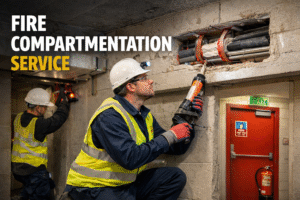
Is Fire Stopping The Same As Compartmentation?
Fire stopping and compartmentation are both critical components of passive fire protection, but they serve different functions and are placed in distinct parts of a building. Fire stopping is used to seal small gaps and service penetrations, such as around pipes, cables, and ductwork. These openings can allow fire and smoke to spread quickly if not properly sealed. On the other hand, fire compartmentation refers to the creation of fire-resistant sections within a building, using walls, floors, and fire doors. These sections are designed to contain a fire within one area for a specified period, usually 30 to 60 minutes. While the two systems differ, fire stopping supports compartmentation by preserving the integrity of fire-rated barriers. For example, a compartment wall will lose its effectiveness if a pipe penetration isn’t properly sealed. Both methods are designed to slow down the spread of fire and smoke, providing more time for evacuation and emergency response. Although they work together, it’s essential to understand that they are not the same and must be applied according to their specific purpose and location within a fire safety plan.
Is Fire Compartmentation A Legal Requirement?
Yes, fire compartmentation is a legal requirement in the UK, enforced through several building safety regulations. The Regulatory Reform (Fire Safety) Order 2005 and Approved Document B clearly define where and how compartmentation must be implemented. Buildings such as multi-storey flats, care homes, and commercial premises must be divided into fire-resistant sections to protect occupants and slow the spread of fire. This includes the use of fire-rated walls, floors, and doors to contain fire within designated areas. The legal duty to ensure proper compartmentation falls on the building owner or the designated “responsible person”. Their role includes assessing fire risks, maintaining fire safety measures, and ensuring ongoing compliance. Failure to meet these requirements can lead to enforcement notices, hefty fines, or criminal charges. Proper fire compartmentation is not just best practice but a statutory obligation, aimed at preserving life, property, and emergency access during fire incidents.

What Is An Example Of Residential Fire Compartmentation?
A common example of residential fire compartmentation can be seen in blocks of flats or shared apartment buildings. In these settings, each individual flat is treated as a separate fire compartment, enclosed by fire-rated walls, floors, and doors. This design helps to contain a fire within the flat of origin, preventing it from spreading rapidly to other units or shared escape routes. Fire doors at entrances to flats and stairwells are critical, providing 30 to 60 minutes of fire resistance. These measures are crucial for protecting escape routes such as stairwells and corridors, allowing residents time to leave safely. Fire compartmentation also limits damage to neighbouring properties, reducing the spread of smoke and heat. This setup is especially important in densely populated housing, where fast-moving fires can pose significant risks. In summary, residential compartmentation supports both safe evacuation and property preservation, making it a key part of modern fire safety design.
What Are Four Locations That Require Firestopping?
Fire stopping is essential in specific areas where fire and smoke can easily pass through structural openings. These are high-risk zones in any building where services or structural features create gaps in fire barriers. Key locations include:
- Service risers and shafts: Vertical spaces where pipes and cables travel between floors.
- Wall and floor junctions: Places where walls meet floors, often leaving gaps that must be sealed.
- Cable trays and ductwork: Especially where they penetrate through fire-rated walls or ceilings.
- Perimeter edges of curtain walls: These must be sealed to prevent vertical fire spread between floors.
In each of these locations, firestopping materials must be tested and approved, complying with relevant safety standards. These seals are designed to maintain the fire rating of the barrier they pass through, effectively blocking the spread of flames, heat, and smoke. Without proper firestopping, a building’s fire protection system is incomplete and non-compliant.
Squared Circle Environmental Safety – Fire Compartmentation Experts in Morley and Leeds
Squared Circle Environmental Safety is a trusted provider of fire compartmentation services in Morley and across Leeds, UK. Their team offers specialist knowledge in creating effective fire barriers that comply with UK safety laws. They assess, install, and maintain fire-resistant walls, floors, and doors, ensuring every project meets both regulatory standards and real-world safety needs.
- Based in Morley, they understand the fire safety challenges faced by local property owners.
- Their services suit residential blocks, schools, care homes, and commercial premises.
- Quick response times, clear communication, and certified solutionsmake them a standout choice.
For property managers and landlords seeking reliable passive fire protection, Squared Circle is a smart, local solution.
Visit their Google Maps profile to learn more and connect with their team.
Schedule a Consultation Today
Need to improve your building’s fire resistance? Contact us today! The team at Squared Circle Environmental Safety provides quick and reliable fire compartmentation services. We offer a free consultation to assess your layout and recommend effective solutions to help stop the spread of fire and smoke. Keep your property safe, speak with our fire safety experts now.