Common Firestopping Failures Found in Commercial Buildings
Across Leeds, Morley, West Yorkshire, and the wider UK, firestopping defects are regularly identified during fire safety inspections of commercial premises, industrial sites, and multi-occupancy buildings. In many cases, these issues remain hidden until a compliance audit, refurbishment project, or passive fire protection survey highlights weaknesses in the building’s compartmentation. Firestopping is designed to prevent the spread of fire and smoke through walls, floors, and ceilings, helping to protect occupants and maintain safe escape routes. However, poor workmanship, unsealed service penetrations, damaged materials, and non-compliant alterations can all compromise the effectiveness of fire barriers. For duty holders, responsible persons, facilities managers, and property owners, identifying and rectifying these defects is an important part of maintaining compliance with UK fire safety legislation and helping to keep buildings safe.
Common firestopping failures include:
- Unsealed service penetrations
- Damaged or missing firestopping materials
- Poor workmanship and incomplete sealing
- Non-compliant refurbishment works
- Failed compartmentation barriers
- Missing certification and documentation
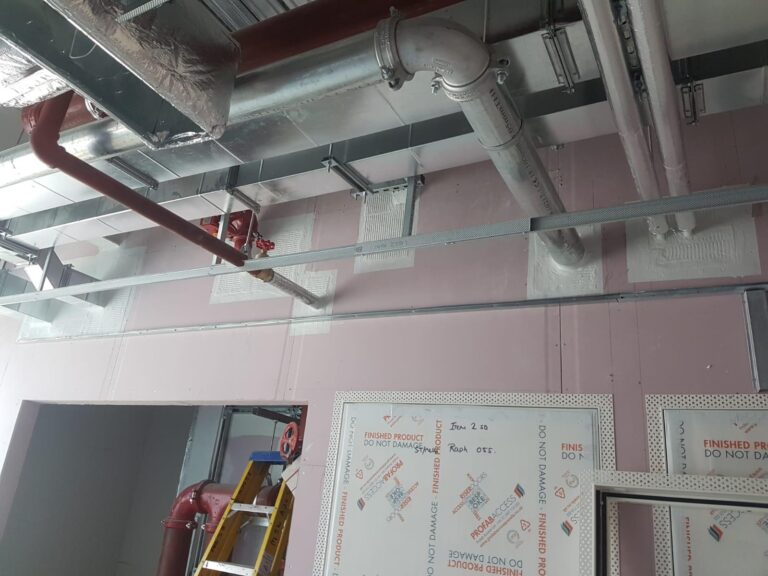
What Are the Most Common Firestopping Defects Found During Building Inspections?
Firestopping systems are designed to maintain compartmentation by preventing fire and smoke from passing through service penetrations and structural openings. During fire safety inspections, passive fire protection surveys, and compliance assessments, inspectors frequently identify defects that reduce the effectiveness of these systems. Common issues include unsealed penetrations around cables and pipework, damaged fire-resistant materials, unsuitable products, and installation methods that do not comply with tested performance standards. Refurbishment works and building alterations are particularly common causes of firestopping failures, as new openings are often created without appropriate fire protection measures being reinstated.
Typical inspection failures include:
- Unsealed penetrations around pipes and cables
- Missing or damaged firestopping products
- Incorrect installation techniques
- Gaps introduced during refurbishment works
- Incomplete sealing around service routes
- Poor-quality remedial works
How Do Unsealed Service Penetrations Increase Fire and Smoke Risks?
Service penetrations are openings created when electrical services, pipework, ductwork, and other building services pass through fire-resisting walls, floors, and ceilings. In commercial premises and industrial sites, these penetrations are unavoidable, but they must be properly protected to maintain compartmentation. If gaps remain unsealed, they can create direct routes for fire, smoke, and hot gases to spread rapidly throughout a building.
The consequences can be serious, particularly where smoke spreads into protected escape routes and affects the safe evacuation of occupants. Unsealed penetrations can also result in non-compliance with UK fire safety requirements and increase the likelihood of remedial works being required following inspections.
Common penetration locations include:
- Pipework installations
- Electrical cabling routes
- Ventilation and ductwork systems
- Cable trays and containment systems
Why Do Firestopping Systems Fail After Refurbishment or Maintenance Works?
Many commercial premises and industrial sites that were originally compliant develop firestopping defects following refurbishment works, maintenance projects, or service upgrades. Whilst the original fire protection may have been installed correctly, alterations carried out by different trades can inadvertently compromise compartmentation if firestopping measures are not reinstated properly.
New service installations frequently create unprotected openings around cables, pipes, ductwork, and containment systems. In some cases, existing fire barriers are damaged during works and are not repaired correctly. A lack of post-work inspections, missing certification records, and poor coordination between contractors can also contribute to compliance failures that remain undiscovered until a later assessment.
Common causes of post-refurbishment failures:
- New service penetrations left unsealed
- Damage to existing fire barriers
- Lack of post-work inspections
- Missing certification records
- Poor coordination between trades
- Inadequate compliance reviews

Why Businesses Across Leeds and Yorkshire Trust Squared Circle Environmental Safety
Businesses throughout Leeds, Morley, West Yorkshire, and across the UK choose Squared Circle Environmental Safety because the company combines practical expertise as fire protection specialists with a strong understanding of UK compliance requirements. From firestopping and compartmentation to passive fire protection inspections and remedial works, the team helps commercial premises, industrial sites, residential properties, and multi-occupancy buildings maintain safer environments and meet their legal responsibilities.
Clients benefit from professionally qualified installers, clear documentation, dependable communication, and practical fire protection solutions tailored to the needs of each building. Rather than focusing solely on compliance paperwork, Squared Circle Environmental Safety prioritises quality workmanship, accountability, and long-term building safety.
Why clients choose Squared Circle:
- Experienced fire protection specialists
- Clear certification and documentation
- Practical compliance advice
- Responsive project support
- Experience across commercial premises and industrial sites
- Long-term commitment to building safety
- Strong Yorkshire presence with UK coverage
From firestopping and passive fire protection to fire door maintenance and certified fire protection installation work, clients receive experienced support backed by recognised industry standards.
Address Firestopping Defects Before They Become Compliance Issues
Whether you manage a commercial premises, industrial site, residential property, or multi-occupancy building, identifying firestopping defects early can help maintain compliance, reduce fire safety risks, and avoid costly remedial works later.
Speak with Squared Circle Environmental Safety for:
- Firestopping inspections
- Passive fire protection support
- Compartmentation assessments
- Compliance documentation
- Remedial firestopping works
- Ongoing fire safety guidance
Contact Squared Circle Environmental Safety today to discuss practical fire protection solutions across Leeds, Yorkshire, and the wider UK.
Schedule a Consultation Today
Book your Asbestos Management Survey in Morley today and gain clear, compliant answers before your renovation, sale or compliance deadline creates unnecessary risk.